Tuesday, December 10, 2019
Tuesday
Today we will discuss chapter 3 of Malcolm X, begin chapter 4, and give you some time to write a summary of chapter 3 on your blog.

Friday, December 6, 2019
Friday
Malcolm X Reading and Blog Schedule
Blogs – record a brief synopsis and
something important about the chapter
12/6
"Ballot or the Bullet"
12/9
"Ballot or the Bullet"
12/10 pages 121 -140 and blog
12/11 pages 140 -170 and blog
12/12 pages 171-196 and blog
12/13 pages 197-216 and blog
"How It Feels to be Colored Men" by Zora Neale Hurston
12/14 pages 216-224 and blog
12/15 pages 225-244 and blog
"Notes of A Native Son" by Richard Wright
12/16 pages 244-262 and blog
"Ain't I a Woman?" by Sojourner Truth
12/17 pages 263 and 287 and blog
"The Position of Poverty"
12/18 FINAL
12/19 FINAL
12/20 pages 288-309
12/21-12/25
pages 310-336
12/26 pages 337-370 and blog
12/27 pages 371-395 and blog
12/28 pages 396-429 and blog
12/29 pages 430-456 and blog
1/2 pages 457-480 and blog
1/3 pages 481-501 and blog
1/6
– Review
1/7
– TEST on MALCOLM X
Wednesday, December 4, 2019
Wednesday
So - I'm stuck in Juneau. He is what you can do today: 1) Rewrite WALDEN essay and let me know when you have the next draft done. 2) Make sure all your dialectical journals are posted (I need to check this today). 3) Read the next chapter of Malcolm X.
Text me if you have questions or problems.
Text me if you have questions or problems.
Sunday, December 1, 2019
Monday - Tuesday
Make sure you post your essay on Walden and begin reading the finest 50 pages or so of Malcolm X.
Email me if you have questions.
Email me if you have questions.
Wednesday, November 13, 2019
Wednesday
Then answer the following in preparation for your essay:
1.) Does Walden appeal to our "sense
of rebelliousness and individualism"? Are we "inspired by his idealistic actions
and principled and good-humored erudition"? Do we enjoy thinking about how we
might take a more "Thoreauvian approach" to our own lives?
2.) How do modern conveniences and gadgets
influence our culture? After reading Thoreau, are we now eager to give them up?
3.) Can we consider how doing and thinking
for ourselves is made possible (or impeded) by modern educational and cultural
institutions?
4.) To which "genre" (or genres) does
Walden belong?
5.) What is Thoreau's relationship to his
audience and to society as a whole? How does he situate his narrative persona?
That is, what kind of person is the "I" in the text, and how do we know?
6.) How can Walden be considered as an
application of Transcendental philosophy?
7.) Choose one tenet of transcendentalism and
explain how Thoreau affirms, complicates, or rejects it in a chapter in
Walden.
8.) Locate passages in the text that seem
directly comparable to one of the other authors we've read -- especially
Emerson, but possibly also others, like Franklin. How does Thoreau use one or
more of the ideas of this author?
9.) Discuss the way that Walden
redefines a familiar word, such as economy, travel, or shelter.
10.) Since Thoreau's text proceeds from the
central metaphor of Walden Pond (in the same way that Whitman's "Song of Myself"
on p. 1238 proceeds from a blade of grass), how does each chapter of Walden
define some overlooked philosophical or metaphorical aspect of nature?
11.) How can Walden be considered as a
response to the "runaway train of nineteenth-century growth, industrialization,
mass agriculture, and capitalist values?
12.) Consider Thoreau's work as a reformist
response to one of the following:
-
industrial capitalism
-
manifest destiny
-
technological progress
-
slavery
ESSAY QUESTION:
As describe in Walden what is Thoreau's assessment of American
Culture (what is wrong with it)? Using specific evidence from the text
discuss and outline his argument. Then respond to it. Do you agree or
disagree with his insights? Discuss.
A good website to look at is Cumming Study Guides - go here
Monday, November 11, 2019
Monday
Please turn in your AP Language essays. We need to look at the next chapter but also the following notes. We also need to discuss ExCom topics.
Then, there is a transition to "ANIMALS". Who are the brutes in this chapter?
There is a famous "War of the Ants" scene in this chapter. Thoreau discusses how this war has been recorded by many writers (hyperbole) and how this war has been going on since the beginning of time. Thoreau is unsure of what they are fighting about, but the war is compared to classical literature (bringing in the human aspect), and it is a war between Ant Races. This is a way for Thoreau to discuss WAR in general, but it is also a subtle allusion to the Mexican-American War.
Chapter 13: House Warming
Fall. You should be thinking about the cycle of life. Thoreau prepares for Winter, building a chimney, plastering his cabin (self-reliance). The Pond freezes and Thoreau is able to look through the ice itself and see the bottom of the pond (Think Pond as the Eye of the World here).
Chapter 14: Former Inhabitants and Winter Neighbors
Remember chapters contrast with the previous chapter.
"For human society, I was obliged to conjure up the former occupants of these woods" (246).
"...pranks of a demon not distinctly named in old mythology, who has acted a prominent and astounding part in our New England lief and deserves...to have his story told."
Like "Brute Neighbors" Thoreau alludes to problems in humans. He receives few visitors in winter, but the woods are filled with ghosts of former inhabitants and he tells some of their stories. Micah related this to Chief Seattle and how the past is always with use.
"#44: "Digging one day for fish-worms I discovered the ground-nut ..." p. 230
This is a similar sentiment to how he found arrow-heads in the earth where he was planting his crops. There is still evidence of the people before us, the natives, even after we had driven them off many, many years ago. They are still here. It can also tie back around to what Chief Seattle was saying, about how you can't get all the dead out of the hills. They will always be there."
Note, the demon he speaks of is Rum. Think about "Civil Disobedience". Rum was made in New England from molasses shipped from the West Indies. This rum was then sent to West Africa to purchase slaves for the West Indies. So even abolitionists in New England profited off the slave trade.
Many of the former inhabitants that Thoreau mentions are either former or run-away slaves, or alcoholics of some sort. What's the connection?
Chapter 15: Winter Animals
Walking on the frozen pond. Listening to and visiting animals (contrast with previous chapter). There is a great story here about the Hunter who "lost his dog but found a man". Think about Thoreau's "pure" definition of man. The Hunter keeps asking Thoreau, while asking about his dog, "What are you doing here?" This seems to be an important point or idea? The hunter (remember Thoreau's discussion of hunting) finds Thoreau - the hermit, the poet...
Chapter 16: The Pond in Winter
You really need to connect this with the chapter "Ponds" or the pond in summer. There is one of the greatest ice cutting scenes in all of literature. Thoreau describes the ice in different colors - emerald (think the importance here), blue. The ice is apparently transported all over. Thoreau talks about being able to look into the pond and see his soul, and then at then end of the chapter connects (through some strange imagination) Walden pond with rivers/waters all over the world. All people drink from his "well" and all water is connected. He connects Ganges, Atlantis, the Persian Gulf - and the past, present and future in water.
Really consider the spiritual nature of water here.
Chapter 17 Spring
Rebirth.
"And so the seasons went rolling on into summer, as one rambles into higher and higher grass."
Note, man-nature-God are all connected, so how do you make sense of the quote?
"I finally left Walden September 6th, 1847." (Near the end of summer).
Chapter 18 Conclusion - which is the conclusion of the book. Think about how he wraps up his themes and returns to the beginning?
Then, there is a transition to "ANIMALS". Who are the brutes in this chapter?
There is a famous "War of the Ants" scene in this chapter. Thoreau discusses how this war has been recorded by many writers (hyperbole) and how this war has been going on since the beginning of time. Thoreau is unsure of what they are fighting about, but the war is compared to classical literature (bringing in the human aspect), and it is a war between Ant Races. This is a way for Thoreau to discuss WAR in general, but it is also a subtle allusion to the Mexican-American War.
Chapter 13: House Warming
Fall. You should be thinking about the cycle of life. Thoreau prepares for Winter, building a chimney, plastering his cabin (self-reliance). The Pond freezes and Thoreau is able to look through the ice itself and see the bottom of the pond (Think Pond as the Eye of the World here).
Chapter 14: Former Inhabitants and Winter Neighbors
Remember chapters contrast with the previous chapter.
"For human society, I was obliged to conjure up the former occupants of these woods" (246).
"...pranks of a demon not distinctly named in old mythology, who has acted a prominent and astounding part in our New England lief and deserves...to have his story told."
Like "Brute Neighbors" Thoreau alludes to problems in humans. He receives few visitors in winter, but the woods are filled with ghosts of former inhabitants and he tells some of their stories. Micah related this to Chief Seattle and how the past is always with use.
"#44: "Digging one day for fish-worms I discovered the ground-nut ..." p. 230
This is a similar sentiment to how he found arrow-heads in the earth where he was planting his crops. There is still evidence of the people before us, the natives, even after we had driven them off many, many years ago. They are still here. It can also tie back around to what Chief Seattle was saying, about how you can't get all the dead out of the hills. They will always be there."
Note, the demon he speaks of is Rum. Think about "Civil Disobedience". Rum was made in New England from molasses shipped from the West Indies. This rum was then sent to West Africa to purchase slaves for the West Indies. So even abolitionists in New England profited off the slave trade.
Many of the former inhabitants that Thoreau mentions are either former or run-away slaves, or alcoholics of some sort. What's the connection?
Chapter 15: Winter Animals
Walking on the frozen pond. Listening to and visiting animals (contrast with previous chapter). There is a great story here about the Hunter who "lost his dog but found a man". Think about Thoreau's "pure" definition of man. The Hunter keeps asking Thoreau, while asking about his dog, "What are you doing here?" This seems to be an important point or idea? The hunter (remember Thoreau's discussion of hunting) finds Thoreau - the hermit, the poet...
Chapter 16: The Pond in Winter
You really need to connect this with the chapter "Ponds" or the pond in summer. There is one of the greatest ice cutting scenes in all of literature. Thoreau describes the ice in different colors - emerald (think the importance here), blue. The ice is apparently transported all over. Thoreau talks about being able to look into the pond and see his soul, and then at then end of the chapter connects (through some strange imagination) Walden pond with rivers/waters all over the world. All people drink from his "well" and all water is connected. He connects Ganges, Atlantis, the Persian Gulf - and the past, present and future in water.
Really consider the spiritual nature of water here.
Chapter 17 Spring
Rebirth.
"And so the seasons went rolling on into summer, as one rambles into higher and higher grass."
Note, man-nature-God are all connected, so how do you make sense of the quote?
"I finally left Walden September 6th, 1847." (Near the end of summer).
Chapter 18 Conclusion - which is the conclusion of the book. Think about how he wraps up his themes and returns to the beginning?
Wednesday, November 6, 2019
Higher Laws
What does Thoreau mean by "Higher Laws"? Read the passage on page 204-2-5 (about hunting and fishing) and then in a well written essay analysis the rhetorical strategies that Thoreau uses to build his argument.
Good luck!
Good luck!
Monday, November 4, 2019
Monday
First - go here
What unifies the structure of Walden has been much debated. Two of the most frequently noted structural devices are the seasonal structure (one year from summer to spring) and a dialectical structure in which pairs of chapters present thematic counterpoints to each other (e.g. "Reading" vs. "Sounds," "Solitude" vs. "Visitors").
Bill McKibben's focus on Thoreau's practical advice for living, however, calls our attention to another structure in which the long opening chapter, "Economy," provides a diagnosis of what is wrong with American life: materialism. The body of the book then presents a cure for the disease of materialism: striving for purity and simplicity as exemplified by Thoreau's own experience and by the symbolic purity of Walden Pond. The final chapter presents Thoreau's optimistic prognosis that each individual reader has the potential to vastly improve his or her life by shifting priorities.
CHAPTER 9
"Ponds" - Thoreau sees something spiritual in ponds and water. Most of the chapter holds an idyllic tone and he describes the unity of nature, self, and divinity. The pond, among other things, is called "God's Drop". Note - "Ponds" also comes between the chapters "Village" which recounts his sojourns to the village of Concord - where he is locked up (he reports on the incessant gossip which numbs the soul, and compares going to the village to running the gauntlet), and the chapter entitled "Baker's Farm" where he talks about his neighbor John Field who works himself to exhaustion to pay for his "rustic hut" and feed his family. The question - why this juxaposition?
Quotes from the chapter to discuss:
"Once in a while we sat together on the pond, he at one end of the boat, and I at the other; but not many words passed between us, for he had grown deaf in his later years, but he occasionally hummed psalm, which harmonized well enough with my philosophy." (169)
"It was very queer, especially in dark nights, when your thoughts had wandered to vast and cosmogonal themes in other spheres, to feel this faint jerk, which came to interrupt your dreams and link you to Nature again. It seemed as if I might next cast my line, upward into the air, as well as downward into this element which was scarcely more dense. Thus I caught two fishes as it were with one hook." (170)
Also on 170 there is a description of Walden" "It is a clear and deep green well, half a mile long and a mile and three quarters in circumference...a perennial sping in the midst of pine and oak woods."
"Lying between the earth and the heavens, it partakes of the color of both" (171)
"A lake is the landscape's most beautiful and expressive feature. It is Earth's eye; looking into which the beholder measures the depth of his own nature." (180)
This is one of the most symbol-laden chapters in Walden; it presents the pond as having human character. Thoreau introduces the symbolic mode at the end of his opening to the chapter, as he talks about fishing at night, when, he says, "I caught two fishes as it were with one hook", a literal fish and a "symbolic" fish.In groups on by yourself answer the following:
In what ways are the following qualities of Walden Pond symbolic of human qualities for which Thoreau thinks we should strive?
- Its depth and the purity of its water
- Its colors, blue and green, and its position between land and sky
- Its role as "earth's eye"
- The pond as a mirror
THEMES:
Self-Reliance
Materialism
Life, Consciousness and Existence
The interconnection of all things
Society and class structure
Visions of America
Technology/Modernization
How to live one’s life
Work vs. Enjoying Life
Tuesday, October 29, 2019
Solitude (away from High School students)
Chapter 5 - "Solitude"
Thoreau makes a case for nature being a better companion than humans.
"I find it wholesome to be alone the greater part of the time. To be in company, even with the best, is soon wearisome and dissipating. I love to be alone. I never found the companion that was so companionable as solitude." (131)
"Next to use the grandest laws are continually being executed. Next to us is not the workman whom we have hired, with whom we love so well to talk, but the workman, who work we are." (130)
NOTE - ANAPHORA
I have occasional visits . . . from an old settler and original proprietor, who is reported to have dug Walden Pond, and stoned it, and fringed it with pine woods; who tells me stories of old time and of new eternity; and between us we manage to pass a cheerful evening with social mirth and pleasant views of things.
Thoreau makes a case for nature being a better companion than humans.
"I find it wholesome to be alone the greater part of the time. To be in company, even with the best, is soon wearisome and dissipating. I love to be alone. I never found the companion that was so companionable as solitude." (131)
"Next to use the grandest laws are continually being executed. Next to us is not the workman whom we have hired, with whom we love so well to talk, but the workman, who work we are." (130)
NOTE - ANAPHORA
I have occasional visits . . . from an old settler and original proprietor, who is reported to have dug Walden Pond, and stoned it, and fringed it with pine woods; who tells me stories of old time and of new eternity; and between us we manage to pass a cheerful evening with social mirth and pleasant views of things.
Monday, October 28, 2019
Monday
Chapter 3 READING
Reading literature is the closest thing to live.
Reading great books requires training such training as athletes undergo.
Nothing truly can be translated.
"Most men have learned to read to serve paltry convenience, as they learned to ciper in order to keep accounts... but reading as a noble intellectual exercise they know little or nothing; yet this only is reading, in a higher sense, not that which lulls us as a luxury .. but what we have to stand on tip-toe to read and devote our most alert and wakeful hours to."
"The best books are not read even by those who are called good readers."
"I do not make any very broad distinction between the illiterateness of my townsman who cannont read at all, and the illiterateness of him who has learned to read only what is for children and feeble intellects."
"We spend more on almost any article of bodily aliment or ailment than on our mental aliment."
Chapter 4 - "Sounds"
This is a strange, but poetic chapter that focuses on the sounds that Thoreau hears when living at Walden (and how the sounds make him feel). There is this idea of Thoreau's that most of humanity doesn't quite listen to its soundings. To be in-tune with the place you live is - in part - to listen closely to it, to hear it, and perhaps to respond to what you hear.
Micah has too really good dialectical journals on this chapter:
#16: "Much is published, but little is printed" p. 108
By published, Thoreau means made public, as in, anyone can observe/hear. There are so many sounds and things of that nature that are able to be observed, each with their own meaning and cause, but very few care to listen, and fewer still, care to write them down. This continues the thought that man uses nature only for what it can get out of it, and tries its best to remove itself from it. Mankind in general doesn't care about the chirping of a bird, or the chirping of crickets. When they do care, it is as an annoyance, a reminder of the world they seek to leave behind by becoming civilized.
#17: The train
In the 'Sounds' chapter, Thoreau goes to great lengths to personify the train that he talks about. How it perspires steam, how it must put on snow shoes, etc. This is done because in a way, the train represents a concentration of what makes humans terrible, at least to Thoreau. They are cold, calculated, used to transport things from one end of the world to another, all the while cutting surgically precise lines through the wilderness that Thoreau believes greater than man. It is a machine made for business, and the making of money on the backs of those who are too lazy and too luxurious to get what they need from the land around them.
"I am refreshed and expanded when the freight train rattles past me, and I smell the stores which go dispensing their odors all the way from Long Wharf to Lake Champlain, reminding me of foreign parts of coral reefs, and Indian oceans, and tropical climes, and the extent of the globe." (116)
"Now that the cars are gone by and all the restless world with them, and the fishes in the pond no longer feel their rumbling. I am more alone than ever. For the rest of the afternoon, perhaps, my meditations are interrupted only by the faint rattle of a carriage or team along the distant highway." (119)
Thursday, October 24, 2019
Thursday
CHAPTER 2 - "Where I Lived and What For"
He goes to Walden Pond because he wishes to live deliberately, to slow down the fast pace of modern life and actually enjoy it. He claims that you can't learn anything from newspapers about live ("The Revolution will not be Televised")
Quotes:
"As long as possible live free and uncommitted. It makes little difference whether you are committed to a farm or a county jail."
"Morning is when I am awake and there is a dawn in me. Moral reform is the effort to throw off sleep. Why is it that men give so poor an account of their day if they have not been slumbering?"
"The millions are awake enough for physical labor; but only one in a million is awake enough for effective intellectual exertion, only one in a hundred millions to a poetic or divine life."
"I have never yet met a man who was quite awake. How could I have looked him in the face?"
"Simplicity, Simplicity, Simplicity."
"We do not ride on the railroads; it rides upon us."
"Why should we live with such hurry and waste of life?"
"To a philosopher all news, as it is called, is gossip."
"Let us spend one day as deliberately as Nature."
"I have always been regretting that I was not as wise as the day I was born."
Chapter 3 READING
Reading literature is the closest thing to live.
Reading great books requires training such training as athletes undergo.
Nothing truly can be translated.
"Most men have learned to read to serve paltry convenience, as they learned to ciper in order to keep accounts... but reading as a noble intellectual exercise they know little or nothing; yet this only is reading, in a higher sense, not that which lulls us as a luxury .. but what we have to stand on tip-toe to read and devote our most alert and wakeful hours to."
"The best books are not read even by those who are called good readers."
"I do not make any very broad distinction between the illiterateness of my townsman who cannont read at all, and the illiterateness of him who has learned to read only what is for children and feeble intellects."
"We spend more on almost any article of bodily aliment or ailment than on our mental aliment."
Thursday, October 17, 2019
Today we will continue with Chapter 1 of Walden. Here is the reading schedule:
10/28 page 100
10/29 page 125
11/4 page 144
11/11 page 228
11/22 Finish
ESSAY QUESTION:
As describe in Walden what is Thoreau's assessment of American
Culture (what is wrong with it)? Using specific evidence from the text
discuss and outline his argument. Then respond to it. Do you agree or
disagree with his insights? Discuss.
Transcendentalism was an intellectual movement that emphasized the dignity of the individual and advocated a simple, mindful life.
Key tenets of transcendentalism included:
1) A theory that "transcendent forms" of truth exist beyond reason and experience; every indvidula is capable of discovering this truth on his or her own, through intuition.
2) A conviction that people are inherently good and should follow their own beliefs, however controversial they may be
3) A belief that humankind, nature, and God are all interconnected
Chapter 1 - ECONOMY
DEFINITION (from dictionary.com)
- thrifty management; frugality in expenditure or consumption of money materials
- the management of the resources of a community
- the prosperity or earnings of a place
Questions:
What is real wealth?
What are the necessities of life?
Do luxuries corrupt? Humans work their entire lives for luxuries.
What does it mean to be philanthropic?
Discuss Thoreau's house?
Quotes: "Cost of a thing is the amount of what I will call life which is required to be exchanged for it, immediately, or in the long run."
Example - house that costs $800 and which takes ten to fifteen years to pay off
"But lo! men have become the tools of their tools."
"Those things for which the most money is demanded are never the things which the student most wants. Tuition, for instance, is an important item in the term bill, while for the far more valuable education which he gets by associating with the most cultivated of his contemporaries no charge is made."
Transportation - "the swiftest traveller is he that goes afoot." The fare of a train is almost a day's wages.
"This spending of the best part of one's life earning money in order to enjoy a questionable liberty during the least valuable part of it."
Monday, October 14, 2019
"Letter from Birmingham Jail"
Today we are going to read MLK's "Letter from Birmingham Jail" and relate it to "Civil Disobedience".
HW: Write a precise for the essay and do questions # 1 and #2 at the end of the essay.
HW: Write a precise for the essay and do questions # 1 and #2 at the end of the essay.
Tuesday, October 8, 2019
Monday, October 7, 2019
Unit 2: Civil Rights
Today - we will start with "Civil Disobedience"
Walden by Henry David Thoreau and keep a dialectical journal.
Second Quarter: A Study of Justice or Civil Rights and Responsibilities
Everyday Use chapters 4-6 (pages 93-153)
“The Times They Are a-Changin’” by Bob Dylan
“Ain’t I a Woman?” by Sojourner Truth
“Civil Disobedience” by Henry David Thoreau
“Letter from the Birmingham Jail” by Martin Luther King Jr.
“The Position of Poverty” by John Kenneth Galbraith
“Notes of a Native Son” by James Baldwin
“The Gettysburg Address” by Abraham Lincoln
“Second Inaugural Address” by Abraham Lincoln
“How It Feels to be Colored Me” by Zora Neale Hurston
“A Vindication of the Rights of Woman” by Mary Wollstonecraft “Speech on the Signing of the Treaty of Port Elliott” by Chief Seattle “The Declaration of Independence” by Thomas Jefferson
Everyday Use chapters 4-6 (pages 93-153)
“The Times They Are a-Changin’” by Bob Dylan
“Ain’t I a Woman?” by Sojourner Truth
“Civil Disobedience” by Henry David Thoreau
“Letter from the Birmingham Jail” by Martin Luther King Jr.
“The Position of Poverty” by John Kenneth Galbraith
“Notes of a Native Son” by James Baldwin
“The Gettysburg Address” by Abraham Lincoln
“Second Inaugural Address” by Abraham Lincoln
“How It Feels to be Colored Me” by Zora Neale Hurston
“A Vindication of the Rights of Woman” by Mary Wollstonecraft “Speech on the Signing of the Treaty of Port Elliott” by Chief Seattle “The Declaration of Independence” by Thomas Jefferson
-
Analyzing appeals to logos, pathos, and ethos
-
Hand-outs on keeping a Dialectical Journal and OPTIC
-
Group and individual analysis of readings
-
Writers workshop – grammar and style exercises
-
Group edition and assessment sessions
-
Vocabulary lists
-
Film clips: “I Have A Dream” by Martin Luther King Jr., National Forensic
League: Orations from National Championships, The Heart of the Game
-
Delivery of Election Orations written in Quarter 1 and in-class election
BLOG WRITING:
Students will continue to write précis on selected readings and on all film clips. Further, they will keep their dialectical journal on The Autobiography of Malcolm X on their blog so that it can be reviewed and commented on by the teacher while in- process, and by fellow classmates. They will do 1 media write up (like quarter 1) every two weeks.
Writing Assignments:
Synthesis Essay on a topic of the students choice that relates to the theme of Justice and Civil Rights. Students must use at least five sources, one of which must be visual – either a chart, photography, political cartoon, video, etc. All sources must be cited in MLA format. The essay will go through multiple drafts.
Analytical Essay – explained above, a response to a prompt based on one of the assigned readings.
2 In-class Timed Essays based on AP prompts.
The Synthesis and Analytical Essay will be graded on rubrics developed by the instructor. The In-class Timed Essays will be graded on the AP rubric.
Tuesday, October 1, 2019
Synthesis
Allegory of the Cave
SYNTHESIS
Paragraph 1
1) Hook (something that is engaging both also relates to your topic and ideally you can return to at the end of the essay).
2) Identify, clarify, explain the issue.
3) Clear, direct thesis statement. This is a position for or against (usually) the prompt. You can also have an order of development if you need it. Just remember that sometimes these appear really mechanical, and if you present one you need to follow it in the order that you give.
Body Paragraphs
You can have as many body paragraphs as possible. This is not a 5-part essay. Actually it will look better if you don't write a 5-part essay.
In your body paragraphs you need a topic sentence.
Explanation of topic sentence (generalizations). An transition or introduction to your specific evidence. Source citation. And you'll need to explain the significance of the supporting evidence.
NOTE - you need to analysis the evidence not just present it or summarize it. What does the evidence me and how does the evidence back up your position.
Technically, you should annotate the sources as you read them and write a short main idea of each.
Concluding Paragraph
Return to your thesis statement (reword it), return to your hook, perhaps significance from the reasons and evidence presented, and bring the paper to a thoughtful ending.
SYNTHESIS
Paragraph 1
1) Hook (something that is engaging both also relates to your topic and ideally you can return to at the end of the essay).
2) Identify, clarify, explain the issue.
3) Clear, direct thesis statement. This is a position for or against (usually) the prompt. You can also have an order of development if you need it. Just remember that sometimes these appear really mechanical, and if you present one you need to follow it in the order that you give.
Body Paragraphs
You can have as many body paragraphs as possible. This is not a 5-part essay. Actually it will look better if you don't write a 5-part essay.
In your body paragraphs you need a topic sentence.
Explanation of topic sentence (generalizations). An transition or introduction to your specific evidence. Source citation. And you'll need to explain the significance of the supporting evidence.
NOTE - you need to analysis the evidence not just present it or summarize it. What does the evidence me and how does the evidence back up your position.
Technically, you should annotate the sources as you read them and write a short main idea of each.
Concluding Paragraph
Return to your thesis statement (reword it), return to your hook, perhaps significance from the reasons and evidence presented, and bring the paper to a thoughtful ending.
Monday, September 30, 2019
Monday - Start Education Essay
To we need to look at "Shooting an Elephant" by George Orwell, and discuss your essay on A TASTE OF POWER.
You should have time to write the precise for "Shooting an Elephant" at the end of class. Note, we will be moving onto Unit 2 towards the end of this week. We will start a little early as we have two books to read.
Second Quarter: A Study of Justice or Civil Rights and Responsibilities
In-class activities:
BLOG WRITING:
Writing Assignments:
Analytical Essay – explained above, a response to a prompt based on one of the assigned readings.
You should have time to write the precise for "Shooting an Elephant" at the end of class. Note, we will be moving onto Unit 2 towards the end of this week. We will start a little early as we have two books to read.
Second Quarter: A Study of Justice or Civil Rights and Responsibilities
Everyday Use
chapters 4-6 (pages 93-153)
“The Times They Are a-Changin’” by Bob Dylan
“Ain’t I a Woman?” by Sojourner Truth
“Civil Disobedience” by Henry David Thoreau
“Letter from the Birmingham Jail” by Martin Luther King Jr.
“The Position of Poverty” by John Kenneth Galbraith
“Notes of a Native Son” by James Baldwin
“The Gettysburg Address” by Abraham Lincoln
“Second Inaugural Address” by Abraham Lincoln
“How It Feels to be Colored Me” by Zora Neale Hurston
“A Vindication of the Rights of Woman” by Mary
Wollstonecraft
“Speech on the Signing of the Treaty of Port Elliott” by
Chief Seattle
“The Declaration of Independence” by Thomas Jefferson
The Autobiography of
Malcolm X by Alex Haley and Malcolm X
Walden by Henry David Thoreau
In-class activities:
·
Analyzing appeals to logos, pathos, and ethos
·
Hand-outs on keeping a Dialectical Journal and OPTIC
·
Group and individual analysis of readings
·
Writers workshop – grammar and style exercises
·
Group edition and assessment sessions
·
·
Film clips: “I Have A Dream” by Martin Luther
King Jr., National Forensic League: Orations from National Championships, The Heart of the Game
·
BLOG WRITING:
Students will continue to write précis on selected readings
and on all film clips. Further, they
will keep their dialectical journal on The
Autobiography of Malcolm X on their blog so that it can be reviewed and
commented on by the teacher while in-process, and by fellow classmates. They will do 1 media write up (like quarter
1) every two weeks.
Writing Assignments:
Synthesis Essay on a topic of the students choice that
relates to the theme of Justice and Civil Rights. Students must use at least five sources, one
of which must be visual – either a chart, photography, political cartoon,
video, etc. All sources must be cited in
MLA format. The essay will go through
multiple drafts.
Analytical Essay – explained above, a response to a prompt based on one of the assigned readings.
2 In-class Timed Essays based on AP prompts.
The Synthesis and Analytical Essay will be graded on rubrics
developed by the instructor. The
In-class Timed Essays will be graded on the AP rubric.
Tuesday, September 24, 2019
Tuesday
Synthesis Essay: Many high schools, colleges, and universities have set curriculums, philosophies, and teaching styles that are deemed important, and yet, every ten years or so, there is debate what what should be taught, how is should be taught, or what philosophies should be adopted. Using the essays (at least three of them) that you have read, make an argument about how schools should go about curriculums (or course of study). What should be taught? How should it be taught? What type of philosophies should be included.
Monday, September 23, 2019
Monday
Today, we are going to discuss your essay on A Taste of Power, read "Education" by Ralph Emerson, and look at synthesis questions from past years.
First let us look at your MC questions in AP Classroom.
HW: Write a precise on "Education"
First let us look at your MC questions in AP Classroom.
HW: Write a precise on "Education"
Wednesday, September 18, 2019
Wednesday
Today we are going to continue to look at EDUCATION for the next synthesis essay (this will be assigned next week). We will read and discuss "A Talk to Teachers"; then, I will give you some time to either 1) Finish the MC assessment that you started yesterday; or 2) Write a Precis on "A Talk to Teachers".
HW: Write a Precis on "A Talk to Teachers" and continue to work on your essay on A TASTE OF POWER.
HW: Write a Precis on "A Talk to Teachers" and continue to work on your essay on A TASTE OF POWER.
Tuesday, September 17, 2019
Tuesday
Today we will finish Chapter 2 of Everyday Use, discuss A Taste of Power, and finally give you some time to work on the assessment on AP Classroom.
Your essay on A Taste of Power will be due next Monday. It is below:
Connecting Brown with Susan Sontag and Maxine Hong ("No Named Women") comment on the following: "(Brown) stands firmly against the masculinist, undemocratic rule of Panther leadership, while at other times she enjoys being a part of that absolute power. At times Brown supports the need for women’s rights to be a part of the Black Panthers’ future, while at other times that feminist urge is completely subjugated in the name of pragmatism." What is Brown's ultimate message - particularly regarding women? Is it inclusion, exclusion? How does it relate to the Black Panther Movement? Why. Take a side on the argument and using evidence from the text, discuss what Brown's ultimate message about women and race is?
Your essay on A Taste of Power will be due next Monday. It is below:
Connecting Brown with Susan Sontag and Maxine Hong ("No Named Women") comment on the following: "(Brown) stands firmly against the masculinist, undemocratic rule of Panther leadership, while at other times she enjoys being a part of that absolute power. At times Brown supports the need for women’s rights to be a part of the Black Panthers’ future, while at other times that feminist urge is completely subjugated in the name of pragmatism." What is Brown's ultimate message - particularly regarding women? Is it inclusion, exclusion? How does it relate to the Black Panther Movement? Why. Take a side on the argument and using evidence from the text, discuss what Brown's ultimate message about women and race is?
Thursday, September 5, 2019
Thursday
Today - I want to talk briefly about the synthesis essay, see where you on with the essay, and post the question for A Taste of Power. This is the essay question for when you get done with the book.
Noam Chomsky once said, “The America that black people have
always known is not an attractive one.”
According to Dr. James Herron, “In the United States our
identities are shaped by Race. People
think of themselves 1st as white or black or native before they
think of themselves as “American”. This
is different than other parts of the world .
Using Brown’s autobiography – particularly the last few chapters – make
a case for or against whether the U.S. should move towards a society where skin
color is secondary?
You must take a stance on the issue and create an argument
using examples or evidence from Elaine Brown’s book.
or
Connecting Brown with Susan Sontag and Maxine Hong ("No Named Women") comment on the following: "(Brown) stands firmly against the masculinist, undemocratic rule of Panther leadership, while at other times she enjoys being a part of that absolute power. At times Brown supports the need for women’s rights to be a part of the Black Panthers’ future, while at other times that feminist urge is completely subjugated in the name of pragmatism." What is Brown's ultimate message - particularly regarding women? Is it inclusion, exclusion? How does it relate to the Black Panther Movement? Why. Take a side on the argument and using evidence from the text, discuss what Brown's ultimate message about women and race is?
or
Connecting Brown with Susan Sontag and Maxine Hong ("No Named Women") comment on the following: "(Brown) stands firmly against the masculinist, undemocratic rule of Panther leadership, while at other times she enjoys being a part of that absolute power. At times Brown supports the need for women’s rights to be a part of the Black Panthers’ future, while at other times that feminist urge is completely subjugated in the name of pragmatism." What is Brown's ultimate message - particularly regarding women? Is it inclusion, exclusion? How does it relate to the Black Panther Movement? Why. Take a side on the argument and using evidence from the text, discuss what Brown's ultimate message about women and race is?
Tuesday, September 3, 2019
Tuesday
Today we are going to focus on the Synthesis Essay question. Lets look at pages 74-85.
By Friday you need to finish a draft of an essay responding to the following prompt:
"Using the following documents on community service requirements in high schools, write an essay explaining whether you believe that high schools in general -- or your specific school - should make community service mandatory. Incorporate references to or quotations from a minimum of three of the sources given."
By Friday you need to finish a draft of an essay responding to the following prompt:
"Using the following documents on community service requirements in high schools, write an essay explaining whether you believe that high schools in general -- or your specific school - should make community service mandatory. Incorporate references to or quotations from a minimum of three of the sources given."
Thursday, August 29, 2019
Thursday
Works have layers of meaning, we see something new each time we read them.
How do you find the Nutritional Value in books, stories, essays and poems?
A - Close reading
-developing an understanding by the words themselves, and then on the larger ideas that the words suggest.
Style is important. It is made up of: body language, gestures, facial expressions, tone of voice, volume, sentence structure, colloquialisms, vocabulary and more. (35)
We read and recount on situations just as we would write about a text we were analysing. The Rhetoric Triangle comes back into play.
Tone and Vocabulary make up a pieces Style, which helps us to discover layers of meaning.
Written and Visual style contribute to the meaning, purpose and effect of a text (37)
Choices of words: diction
Arrangement of words: syntax
Trope: artful diction. Metaphor, simile, personification, hyperbole
Scheme: artful syntax. Parallelisms, Juxtapositions, antitheses
Question You Should Ask (37)
*when analyzing diction
- Which of the important words in the passage (verbs, nouns, adjectives, and adverbs) are general and abstract? Which are specific and concrete?
- Are there important words formal, informal, colloquial, or slang?
- Are some words nonliteral or figurative, creating figures of speech such as metaphors?
- When analyzing syntax
- What is the order of the parts of the sentence? Is it the usual (subject-verb-object), or is it inverted?
- Which part of speech is more prominant - nouns or verbs?
- What are the sentences like? Are they periodic (moving toward something important at the end) or cumulative (adding details that support an important idea in the beginning of the sentence)?
- How does the sentence connect its words, phrases and clauses?
Annotation is a super dank tool for analyzing (40)
-Circle words you dont know
-identify main ideas, thesis statements, topic sentences
-identify words and phrases you dont understand or that appeal to you
-look for figures of speech or tropes (metaphors, similies, personification)
-look for imagery and detail
Dialectical Journals are another way to interact with the text
These use columns to represent the conversation between the text and reader.
Note Taking
|
Paragraph
|
Note Making
|
Zeugma: connecting two seemingly different things in the same grammatical construct,
(“drying the hills and the nerves”)
*What effect is the author striving for?
*how does the effect serve the purpose of her writing?
Graphic Organizer
-takes time to complete, but lets you gather a lot of information
*Copy something the writer says, but then put it into your own words
*then analyze how the author said it and what that specific construction implies
These tools for analyzing written text are also very useful for analyzing visuals
*”The more we examine the elements of diction and syntax and consider their effects, the deeper our understanding of an essay, a speech, or a visual text becomes.” (51)
Tuesday, August 27, 2019
Tuesday
Today, we are going to talk about your first sentence of your PRECIS on NO NAME WOMEN. Then have you write the second and three sentence. Finally we will look at the 1st chapter in EVERYDAY USE.
HOMEWORK: Rewrite essay on "UPON SEEING ENGLAND FOR THE FIRST TIME". Look at
THE Prompt: Read the passage ‘On Seeing England’ carefully. Then write an essay analyzing the rhetorical strategies Kincaid employs to convey her attitude toward England.
We will also go over the new rubric.
Reading schedule for A Taste of Power
8/19 pages 17-62
8/20 pages 62-83
8/21 pages 83-104
8/22 READ COMPOSITION OF LANGUAGE chapter 1
8/23 READ COMPOSITION OF LANGUAGE chapter 2
8/26 pages 105-170
8/27 COMPOSITION OF LANGUAGE chapter 3
8/28 pages 171-184
8/29 pages 185-207
8/30 pages 208-240
9/3 pages 241-327
9/11 FINISH BOOK
HOMEWORK: Rewrite essay on "UPON SEEING ENGLAND FOR THE FIRST TIME". Look at
THE Prompt: Read the passage ‘On Seeing England’ carefully. Then write an essay analyzing the rhetorical strategies Kincaid employs to convey her attitude toward England.
We will also go over the new rubric.
Reading schedule for A Taste of Power
8/19 pages 17-62
8/20 pages 62-83
8/21 pages 83-104
8/22 READ COMPOSITION OF LANGUAGE chapter 1
8/23 READ COMPOSITION OF LANGUAGE chapter 2
8/26 pages 105-170
8/27 COMPOSITION OF LANGUAGE chapter 3
8/28 pages 171-184
8/29 pages 185-207
8/30 pages 208-240
9/3 pages 241-327
9/11 FINISH BOOK
Monday, August 26, 2019
Monday
Today we are going to go over your news articles and discuss A TASTE OF POWER. We are also going to read "No Named Woman" (page 383 in The Best American Essays of the Century) and write a precis - step by step.
NOTES TO LOOK OVER
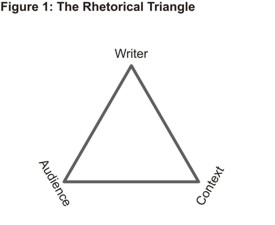
What in the World is Rhetoric???
Well, according to the book, rhetoric is "a thoughtful, reflective activity leading to effective communication, including rational exchange of opposing viewpoints." This to me sounds like the act of opening your mouth and conversing, or perhaps, debating with someone.
KEY ELEMENTS:
-Context
The context is the occasion that the essay/speech was given. This can be somewhat like the setting of a story, and by knowing this, you can properly assess who the intended audience is and whether or not the context increases the effectivity of the piece.
-Purpose
The goal that the speaker/writer/author wanted to achieve. This coincides with the context and allows the writer to choose the best possible audience in which to present the piece.
-Thesis/claim/assertion
This could be the
-Subject
What the piece is about, the topic, y'know... so the author should have a very good grasp on what he/she/it wants to talk about in order to express the ideas/comments thoroughly and with as much consistency as possible.
Ethos:
Ethos is the character of the writer or the speaker. Good ethos is when the writer presents his/her/itself as a classy individual while also coming off as "credible and trustworthy". Allowing the audience to connect with the author is something that really helps push the point across and deliver the best results for giving a great speech/rhetoric.
Logos:
Logos is the appeal to logic/reason, by offering the audience clear and easy-ro-understand ideas that make as much sense as possible, while remaining rational. Presenting a main idea in a concise manner, showing another side/counterargument, credible statistics and facts, and/or expert testimony. (See "Things Fielding told us to include in Persuasive Essays.")
Pathos:
Pathos is the appeal to emotion. While this isn't something that should be emphasized as it can come off as propaganda which is not what you want. Appealing to the emotions means using vivid word choice that can easily stimulate the readers' thoughts and using the first-person perspective.
The Classical Arrangement of Rhetoric:
1. Introduction (exordium)
-Brings the reader into the discussion, emerging them into the world of rhetoric. Introductions can be a couple short sentences, or several lengthy paragraphs (pages...!). Drawing the reader in is important (hook) and presenting the main idea (thesis statement) and stating the order of development. Normally, this is where the author would establish ethos.
2. Narration (narratio)
-Factual information is presented and background information give the reader that much more insight into the subject. This is typically when you would begin to appeal to logos, yet it is smart to consider appealing to pathos as you are inclined to evoke an emotional response form the reader so that they can firmly decide on your opinion with the facts and statements you present.
3. Confirmation (confirmatio)
-A large portion of the writing that sets up the proof of your argument and why the audience should agree. The details in this section should be strong and thorough, while making the biggest appeal to logos in this section.
4. Refutation (refutatio)
-This part of the writing takes a look at the other side of the topic, the counterargument, if you want to call it that. Used as a "bridge between the writer's proof and conclusion" but also as appeal to ethos, as the audience can see that you are passionate enough about your subject that you chose to research both sides to get as informed as possible.
5. Conclusion (peroratio)
-Closing the essay, appealing to pathos one final time as well as connecting with ethos set up in the beginning of the piece. Instead of repeating what has already been said (guilty of this on several occasions... :l ), the writer's ideas should all get compacted into one and "answers the question, so what?" The last words are usually the ones that the audience is going to remember, so make them count. Throw it all out on the table and sum up the essay with as much intelligence as possible!
Patterns of Development:
Authors can change their arrangement by writing in order of purpose. Each method of writing purposefully has its own way of organizing thoughts and piecing together all the little eccentricities neatly and professionally.
Types of Essays We'll Be Writing:
Narration: Tells a story and recounts tales of slaying dragons and mystical creatures. Not really, but narration is typically a recollection of previous events, usually chronologically, or as a means to enter into the main idea of an essay.
Description: Much like narration and just as detailed (if not, more so), but the details focus more on the sensory responses from the readers. These include, the ways things taste, the sounds around the writer, textures and feelings, sights, colours, setting up an atmosphere for the piece. The descriptive language is a way to help make thoughts more approachable to the readers and helps in being more persuasive.
Process Analysis: An explanation. A how-to. The steps on how to achieve something or engage in a process. These can best be found in (according to the book) self-help books. Because these are going to help the way someone lives or acts, you must be as clear as possible in the instruction with smooth, flowing transitions as to not miss a step or confuse anyone.
Exemplification: Hopefully, this is readable... Facts, examples, testimonies are all ways to make an idea complete. With complete ideas, come more acceptable readers and easier persuasion.
Comparison and Contrast: Highlighting similarities and differences in an organized fashion allows clear presentation of points that can be easy to digest for the audience. With careful analytics, the author can find interesting tidbits of information that could open up ideas to readers that otherwise couldn't be achieved, as well as highlighting both sides of an argument or multiple angles of a topic.
Classification and Division: Sorting information into how topics go together and why. Connections can be made between things that are seemingly unrelated and thus, like Comparison and Contrast, can reveal difference aspects to the reader that otherwise were unknown.
Definition: Defining something can allow more points to come through and allow "meaningful conversation". Example: (See what I'm doing here?) Let's talk about how awesome alligators are. But before we do this, we must DEFINE what counts as "awesome". Perhaps a dictionary definition.
Cause and Effect: Causes and Effects. Self explanitory... "The effects that result from a cause is a powerful foundation for argument." Seems legit.
Subscribe to:
Comments (Atom)